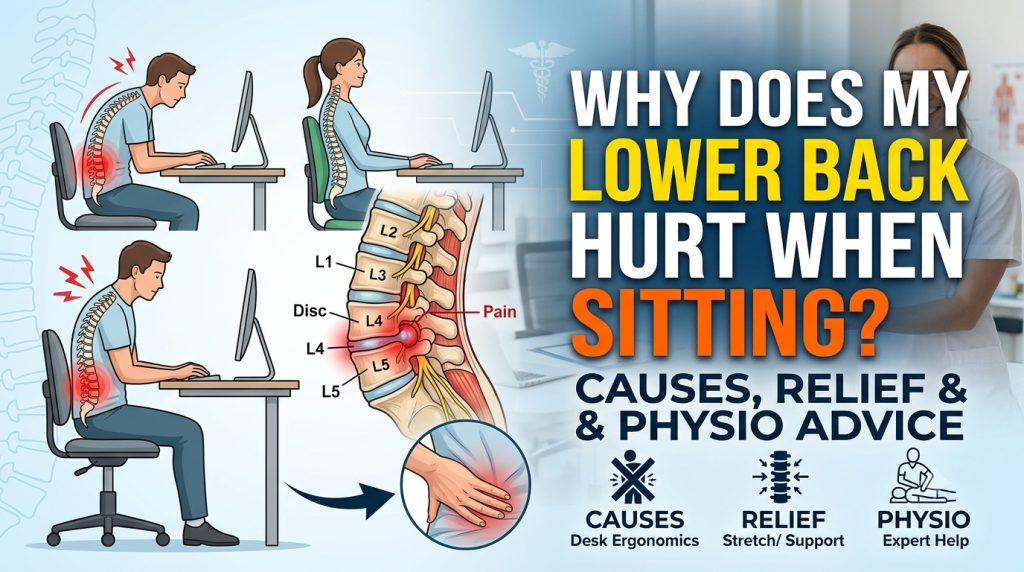
If your lower back starts hurting after sitting at a desk, working on a laptop, driving, studying, or relaxing on the sofa, you are not alone. Lower back pain when sitting is common and can have several possible causes.
Sitting itself is not necessarily harmful. However, staying in one position for a long time, slouching, limited movement, poor workstation setup, or an underlying back or nerve problem may contribute to discomfort.
In many cases, lower back pain is non-specific, meaning there is no single identifiable structural cause. The World Health Organization estimates that around 90% of low back pain is non-specific.
The important question is not simply, “Is sitting causing my back pain?” It is what happens when you sit, how long you can sit comfortably, what movements change your symptoms, and whether you have any other symptoms?
If your pain keeps returning or interferes with work, sleep, walking, or daily activities, an individual assessment can help identify the most appropriate next step.
Why Does My Lower Back Hurt When I Sit?
Your lower back may hurt when sitting because of:
- Slouched or unsupported sitting
- Reduced movement during long periods of desk work
- Muscle or joint sensitivity
- Poorly adjusted chair or workstation
- Previous back injury
- Reduced strength or physical capacity
- Symptoms associated with nerve irritation, such as sciatica
- Other medical conditions that require assessment
There is no single sitting posture that is perfect for everyone. Instead, changing position regularly, staying active and adjusting your workstation to your needs may be more useful than trying to maintain one rigid posture all day.
What Causes Lower Back Pain When Sitting?
1. Sitting in One Position for Too Long
One of the most common reasons your lower back may hurt while sitting is simply spending a long time in the same position.
When you sit continuously for hours, you may move less, change your posture less often and place sustained demands on your back and surrounding tissues. For example, you might notice:
- Pain after sitting for 30–60 minutes
- Stiffness when standing up
- Relief after walking around
- Discomfort after long meetings
Regular movement breaks can help reduce the amount of time your body spends in one position.
2. Slouched or Unsupported Sitting
Leaning forward toward a laptop or phone, rounding your shoulders and allowing your pelvis to roll backward may increase discomfort for some people.
A slouched position does not automatically mean you have damaged your spine. However, if a particular sitting position consistently increases your symptoms, changing position and moving more frequently may help. Instead of focusing on maintaining a “perfect” posture all day, try to:
- Keep your feet comfortably supported
- Position your screen at a comfortable height
- Avoid staying in one position for prolonged periods
- Change your sitting position regularly
- Stand and walk periodically
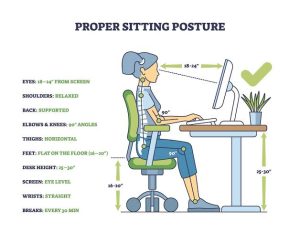
3. Poor Desk or Workstation Setup
Your chair, desk, monitor, keyboard and working habits can all influence how comfortable you feel during prolonged sitting.
For example, a laptop positioned too low may encourage you to lean forward. A chair that does not suit your body may also make it difficult to find a comfortable position. A practical workstation setup may include:
- A chair that allows comfortable support
- Feet supported on the floor or an appropriate footrest
- Screen positioned so you do not constantly bend your neck forward
- Keyboard and mouse positioned comfortably
- Regular movement breaks
Ergonomic adjustments are among the self-management strategies recommended for low back pain.
Why Does My Lower Back Hurt After Sitting for a Long Time?
If your back feels worse after prolonged sitting but improves when you stand or walk, the issue may be related to sustained positioning and reduced movement. You may notice a pattern such as:
Sitting → stiffness or discomfort → standing/walking → symptoms reduce
This pattern can be useful information during an assessment. Rather than assuming that one muscle or disc is responsible, a physiotherapist may consider your:
- Pain pattern
- Movement
- Strength and physical capacity
- Work and sitting habits
- Previous injuries
- Sleep and daily activities
- Functional limitations
- Other symptoms
This is why an assessment is often more useful than trying to diagnose the cause from the location of pain alone.
Can Sitting Cause Sciatica?
Sometimes lower back pain while sitting occurs alongside symptoms that travel from the lower back or buttock into the leg. Possible nerve-related symptoms can include:
- Pain travelling into the leg
- Tingling
- Numbness
- Burning sensations
- Weakness
These symptoms should not automatically be labelled as sciatica without appropriate assessment. The Dr. Tapas Mitra clinic specifically recommends careful screening and assessment for leg symptoms or possible nerve-related presentations.
If you have significant or worsening neurological symptoms, medical evaluation may be appropriate.
How Can I Relieve Lower Back Pain from Sitting?
If sitting makes your back uncomfortable, consider these practical strategies.
1. Change Position Regularly
Avoid treating sitting posture as something you must hold perfectly for hours. Instead, change position regularly. You can:
- Stand briefly
- Walk around your room or office
- Change your sitting position
- Perform gentle movements
- Alternate between sitting and standing when practical
Staying physically active is an important part of managing non-specific low back pain.
2. Adjust Your Workstation
Check whether your:
- Chair is comfortable
- Feet are supported
- Screen is positioned appropriately
- Keyboard and mouse are easy to reach
- Desk height allows you to work without excessive reaching or bending
Small changes can make prolonged desk work more comfortable.
3. Avoid Complete Bed Rest
If your back is sore, it may be tempting to stop moving completely. For many cases of non-specific low back pain, maintaining appropriate activity is preferable to prolonged inactivity. The right level of activity depends on your symptoms and individual situation.
What Exercises Help Lower Back Pain From Sitting?
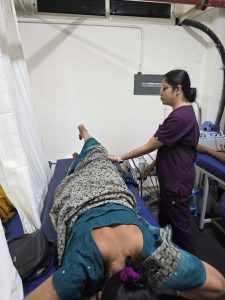
There is no universal “best” exercise for everyone with lower back pain. Depending on the assessment, a physiotherapist may consider exercises involving:
- Trunk and core strengthening
- Hip and lower-limb strengthening
- Mobility exercises
- Movement-control exercises
- Progressive functional exercises
- Walking or other appropriate aerobic activity
The goal is not simply to strengthen your back. A rehabilitation programme may aim to improve movement, strength, confidence, activity tolerance and your ability to perform everyday tasks.
The World Health Organization recommends physical activity and appropriate physical therapies as part of management for non-specific low back pain.
When Should You See a Physiotherapist for Lower Back Pain?
You may consider a physiotherapy assessment if:
- Your back pain keeps returning
- Sitting is affecting your work or studies
- You cannot sit for as long as you normally could
- Pain is limiting daily activities
- You are avoiding movement because of discomfort
- You have stiffness or reduced movement
- You are recovering from a previous back injury
- You have tried changing your activity but symptoms continue
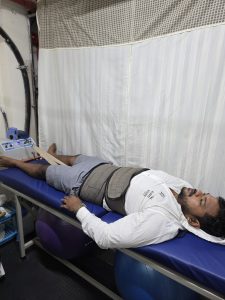
Physiotherapy does not mean that every person needs the same treatment. At Dr. Tapas Mitra Physiotherapy & Manual Therapy Clinic in Saheed Nagar, Bhubaneswar, care begins with assessment of your history, movement, function and goals before recommendations are made.
Depending on the findings, a care plan may include education, progressive exercise, movement guidance, self-management strategies and, when clinically appropriate, manual therapy.
How Can Physiotherapy Help Lower Back Pain?
A physiotherapy assessment can help answer questions such as:
- What activities make your symptoms better or worse?
- Does sitting, standing, bending or walking change your pain?
- Are there movement limitations?
- Is your strength or physical capacity affecting your activities?
- Are there symptoms that require further medical assessment?
- What activities do you want to return to?
At Dr. Tapas Mitra Physiotherapy & Manual Therapy Clinic, the stated approach is assessment-led and individualized, with progress reviewed according to the person’s goals, tolerance and response to care.
Manual therapy may be considered when appropriate, but the clinic describes it as part of a broader plan that can include movement, exercise and education rather than as a stand-alone treatment.
Lower Back Pain Physiotherapy in Bhubaneswar
If you are looking for physiotherapy for lower back pain in Bhubaneswar, Dr. Tapas Mitra Physiotherapy & Manual Therapy Clinic is located in Saheed Nagar.
The clinic provides assessment-led physiotherapy for back pain and movement limitations, with clinic-based care and home-visit options depending on location, scheduling and clinical suitability.
When an Assessment May Be Useful
An assessment may be particularly useful when your lower back pain:
- Is affecting your ability to work
- Returns repeatedly after sitting
- Limits exercise or daily activities
- Is associated with stiffness or movement difficulty
- Has continued despite reasonable self-management
The purpose of assessment is not simply to identify a “bad posture.” It is to understand the overall pattern and determine what type of care, self-management or referral may be appropriate.
Dr. Tapas Mitra Physiotherapy & Manual Therapy Clinic
Saheed Nagar, Bhubaneswar, Odisha
Physiotherapy for back pain • Assessment • Exercise-based rehabilitation • Manual therapy when appropriate